

Targeted Muscle Care
Trigger Point Relief
Dry Needling Therapy may help target specific trigger points and tight muscles that contribute to pain, stiffness, and restricted movement.
Relieve muscle tension and trigger-point pain with personalized Dry Needling Therapy. Your treatment may also include exercise, movement training, and rehabilitation based on your needs and recovery goals.

Dry Needling uses thin, sterile needles to target specific tight muscles and trigger points that may contribute to pain, stiffness, or restricted movement. It is commonly used as part of physiotherapy care to help reduce muscle tension and support better movement.
Unlike acupuncture, which is based on traditional Chinese medicine principles and uses specific acupuncture points, Dry Needling is based on modern musculoskeletal and rehabilitation principles. Your physiotherapist may use Dry Needling alongside other treatments based on your symptoms and assessment.

“Dry needling is most useful when it is guided by a thorough assessment and combined with an individualized rehabilitation plan.”
Abbotsford Clinical TeamOur treatment plans combine Dry Needling Therapy when appropriate with active movement, exercise therapy, movement retraining, and individualized rehabilitation to improve comfort, mobility, and confidence.
Dry Needling Therapy may help target specific trigger points and tight muscles that contribute to pain, stiffness, and restricted movement.

Targeted treatment may help reduce muscle tightness and soft-tissue discomfort while supporting more comfortable movement.
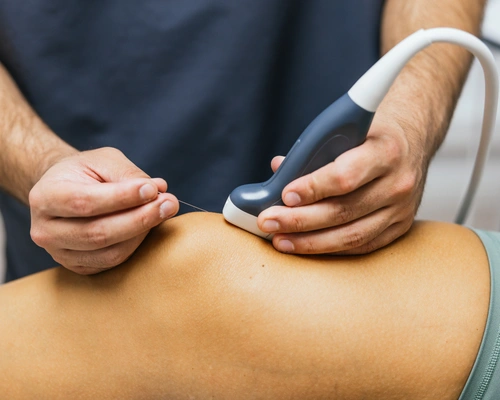
Dry Needling can be combined with exercise therapy and movement retraining to support mobility, muscle control, and everyday function.

Addressing areas of muscle tension alongside rehabilitation may help improve movement patterns, strength, and tolerance for daily activities.

Dry Needling may be used alongside progressive exercises and hands-on care to support recovery and help you return to regular activities.

Practical guidance can help you manage muscle tension, understand contributing factors, and maintain progress between physiotherapy sessions.
Muscle pain, tightness, and stiffness can affect movement and daily activities. Our Abbotsford physiotherapists assess your symptoms and may use Dry Needling Therapy as part of your treatment plan for:





We are committed to providing individualized, evidence-informed care for our Fraser Valley community:

A transparent, structured path designed to help you understand your symptoms, receive appropriate treatment, and progress toward comfortable everyday activity.

We discuss your symptoms and goals, assess movement and muscle function, and identify factors that may be contributing to persistent pain and tension.

You receive a personalized plan based on your assessment, symptoms, lifestyle, and recovery goals, including whether Dry Needling Therapy is appropriate and what rehabilitation should accompany it.

When appropriate, Dry Needling Therapy may be combined with hands-on techniques, movement retraining, education, and supervised exercises to address muscle tension and trigger-point related symptoms.

We provide practical home strategies and exercise guidance to support lasting improvements in movement, strength, and symptom management.
Ask our team about available extended health coverage and direct billing options for physiotherapy and Dry Needling Therapy. Coverage varies by individual plan.
Check Your CoverageHave questions about Dry Needling Therapy? Here are some common questions patients may have before starting treatment.
You may feel a brief prick or a small muscle twitch during treatment. Your physiotherapist will explain what to expect and make sure you are comfortable throughout the session.
The treatment time depends on your assessment and treatment plan. Your physiotherapist will discuss the session length and what will be included before treatment begins.
Your physiotherapist will advise you based on your symptoms and treatment. Light movement may be encouraged, while certain activities may need to be modified for a short time.
Some people may have mild soreness, bruising, or tenderness around the treated area. These effects are usually temporary and your physiotherapist will explain what to expect.
Dry Needling Therapy is not appropriate for every person or condition. Your physiotherapist will review your health history and symptoms to determine whether it is suitable for you.